The
Lomo LC-A isn't one of the cheap plastic cameras, but it can be found
for low prices. It's easy to handle, doesn't let you know the settings
it chose, and the lens is soft wide open. It makes part of the
Lomography family and its style of photographing. In 1992 some Vienna
students founded the "Lomographische Gesellschaft" to promote free
photographing and the started with the LC-A as their main tool. Their
association became a firm and the firm promoted other cheap cameras
later.
The
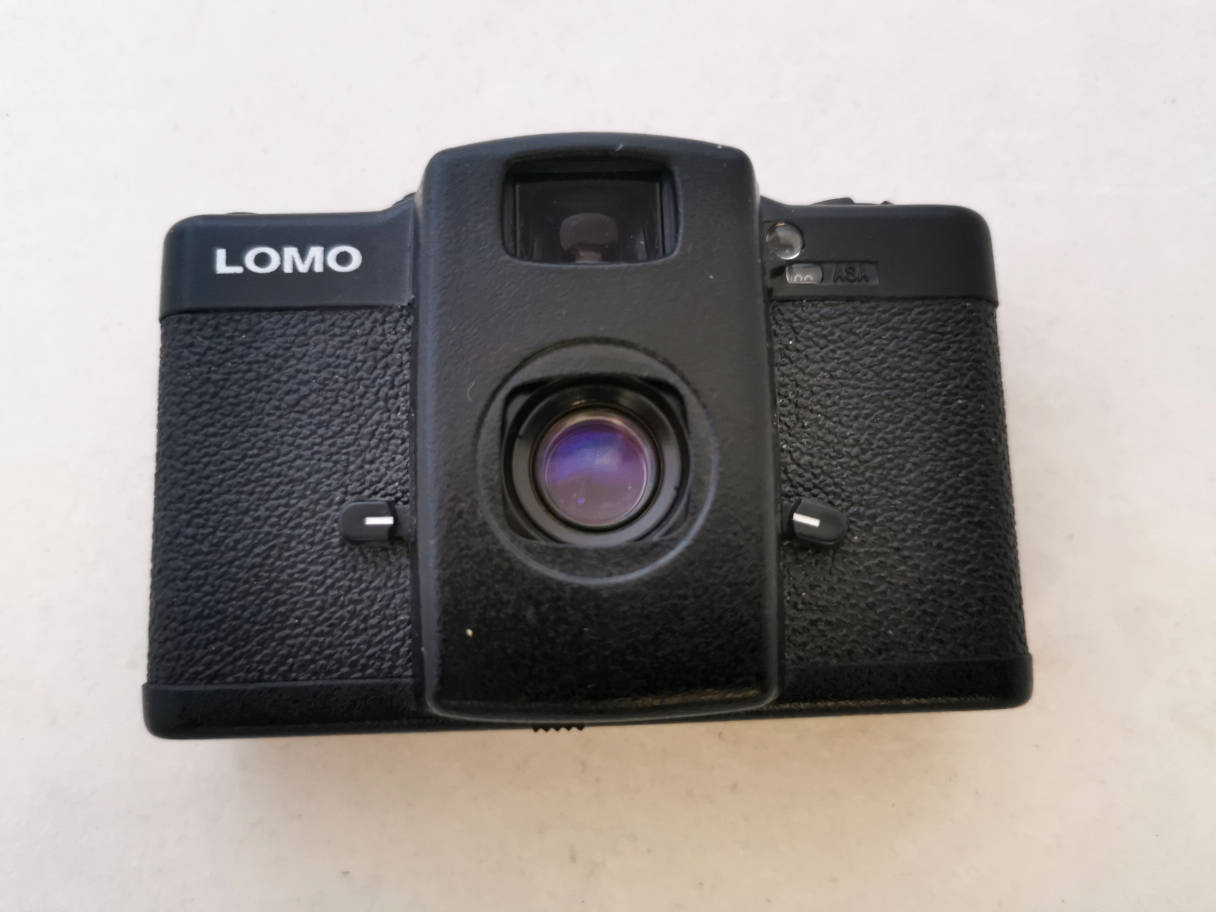
Lomo LC-A (Lomo Compact Automat) is a very small 35mm film camera with automatic exposure. It
was released in 1984 by Leningradskoye Optiko-Mekhanicheskoye Obyedinenie
(LOMO). In 1994 production ended. It was resumed in 1995
for the Lomography company after they reached an exclusuve deal with
the deputy mayor of St Petersburg, the future Russian Prime Minister
and President, Vladimir Putin, to receive a tax break in order to keep
the LOMO factory in the city open (source: Wikipedia). The camera was
produced in Russia until 2005. In 2006
production was resumed in China as LC-A+. The original of this camera
was the Cosina CX-2, from which Lomo copied its LC-A widely. The CX-2
has a better lens and a self-timer. It is very easy to handle: You just
slide dustcover open and it's ready. Its main features are:
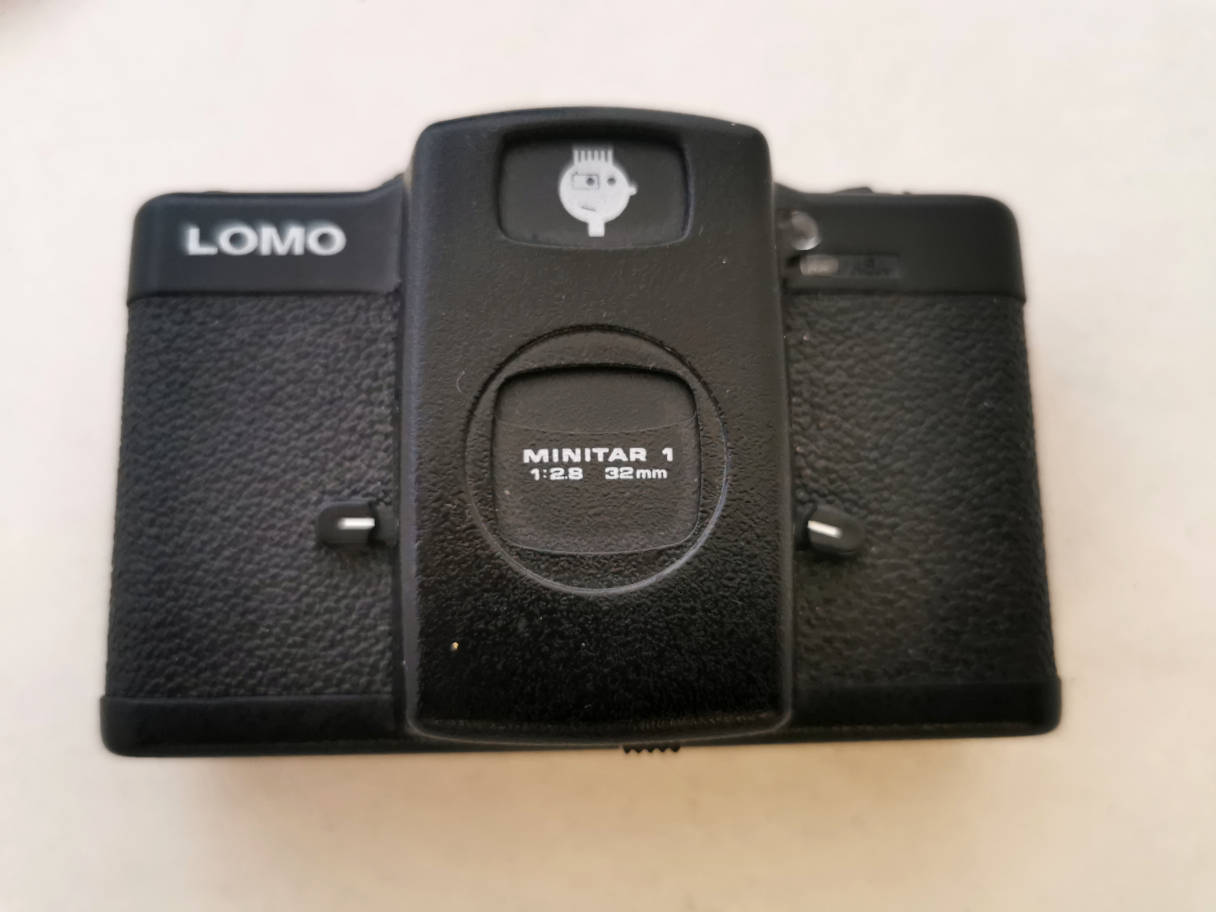
32mm F2.8 Minitar-1 lens, 3 elements, zone focus, indicator in viewer window for early models, min. focus 0,80m Automatic electronic shutter, ~120sec(!!).-1/500, Aperture F 2.8-16, Flash sync 1/60s, manual aperture. Battery o.k. and exposure warning LED in viewfinder Size 107x68x43,5, Weight 250 gr. 25-400 ISO
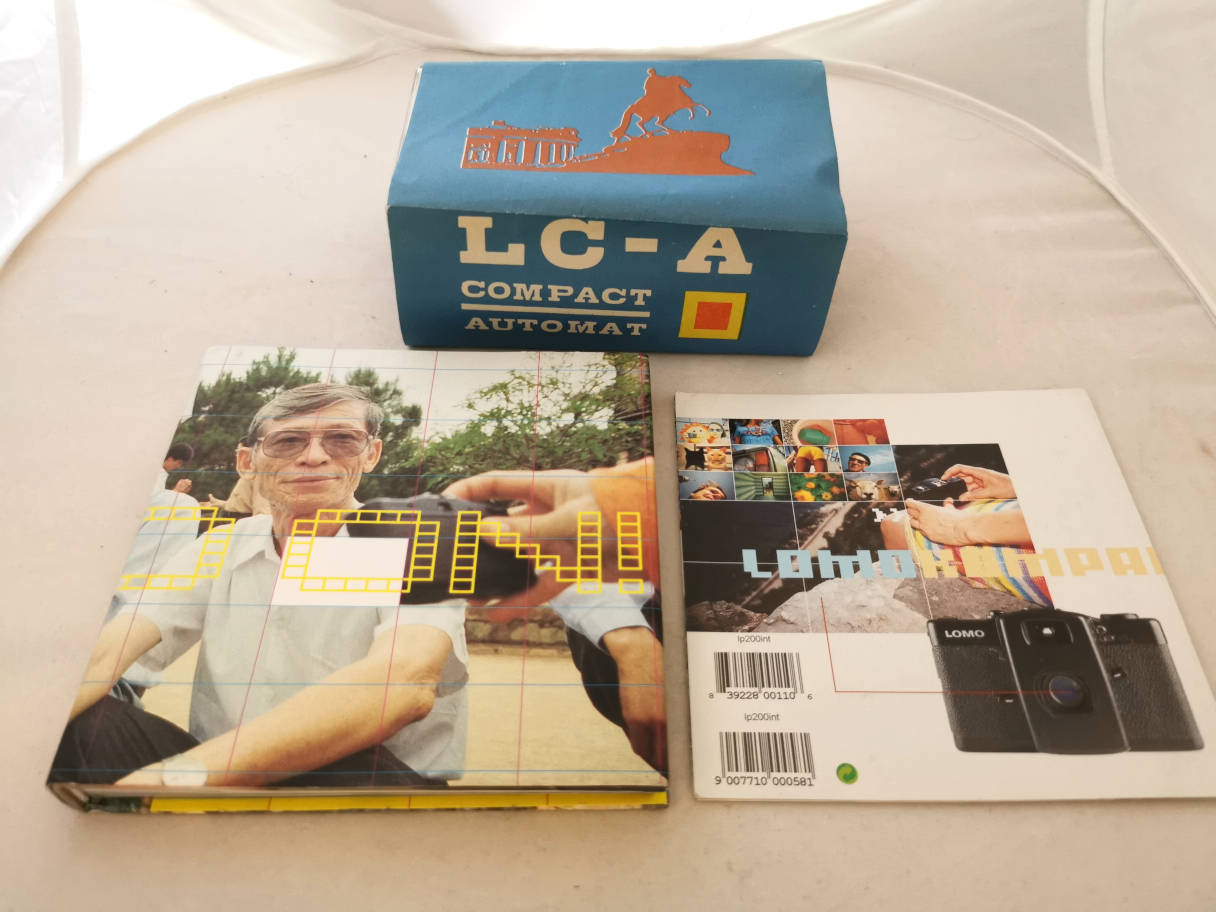
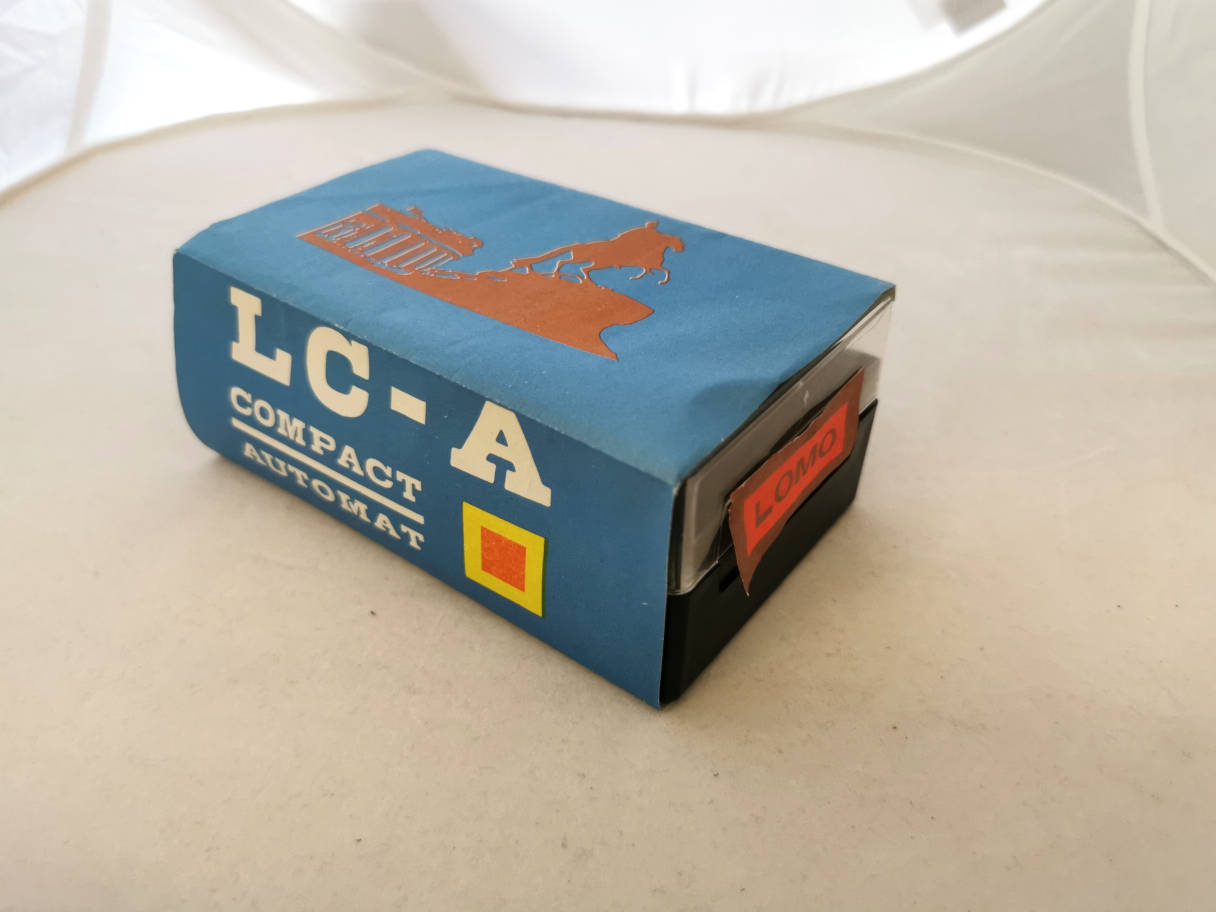
A late Russian model, marketed by Lomography in its original Russian Box, a book and instructions added by Lomography.
The box.
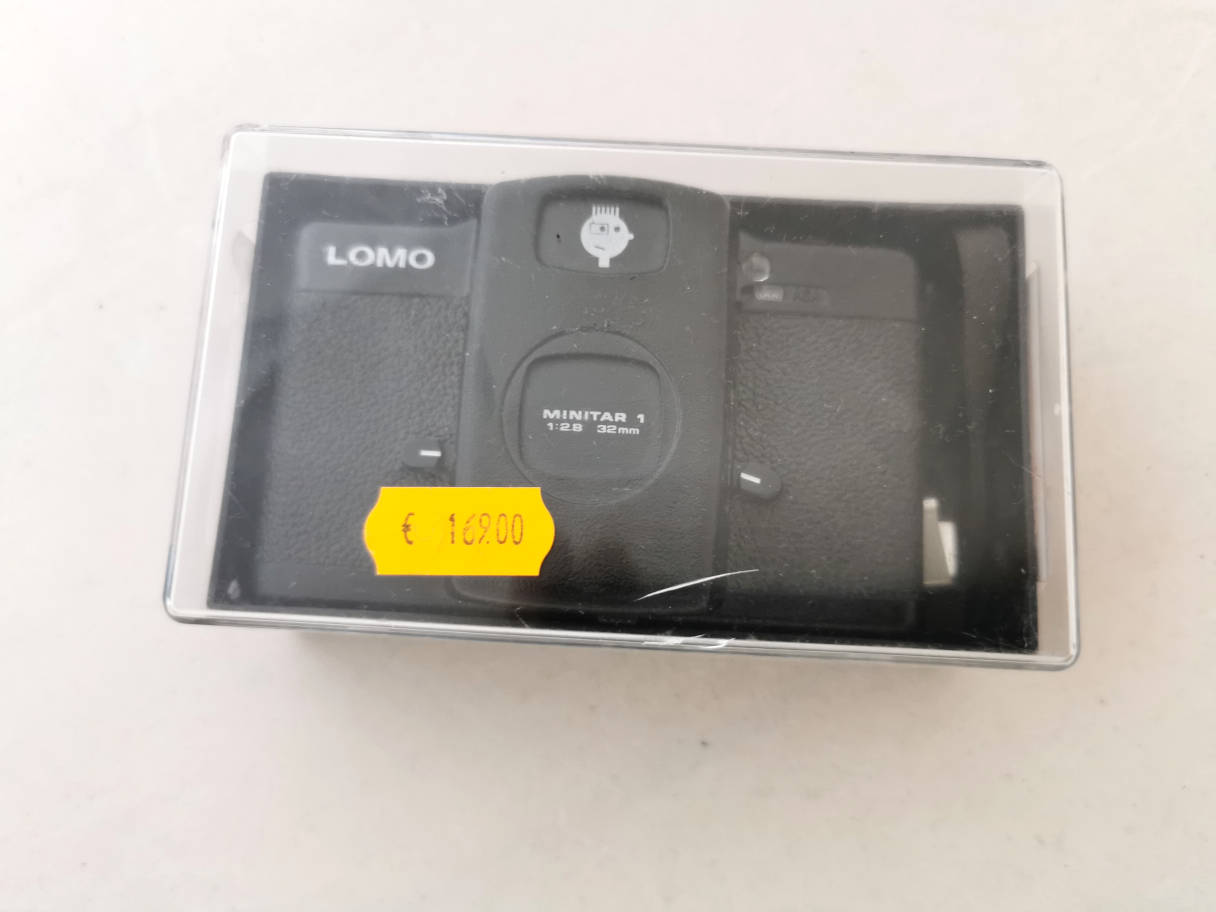
The camera was quite expensive.
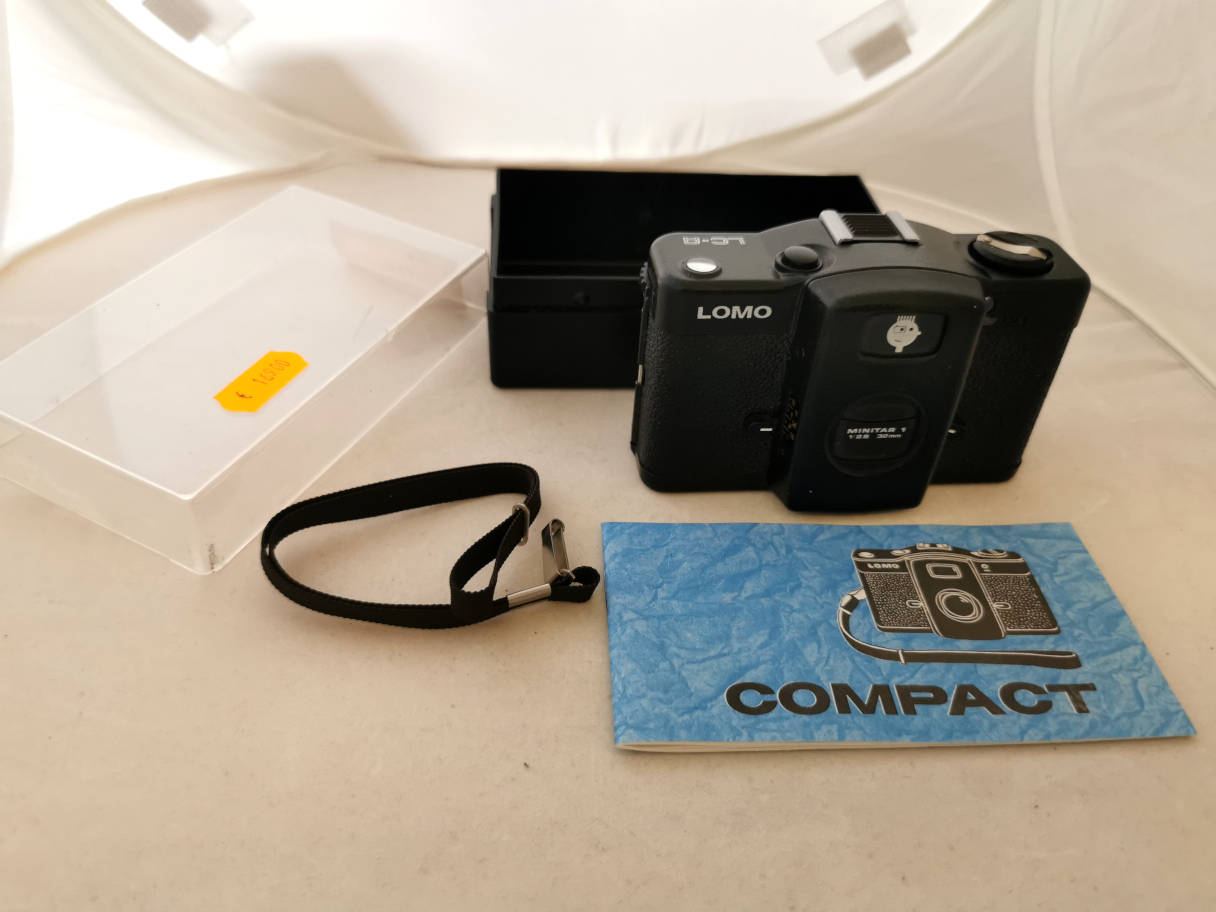
What's in the box: Camera, strap and instructions (English).
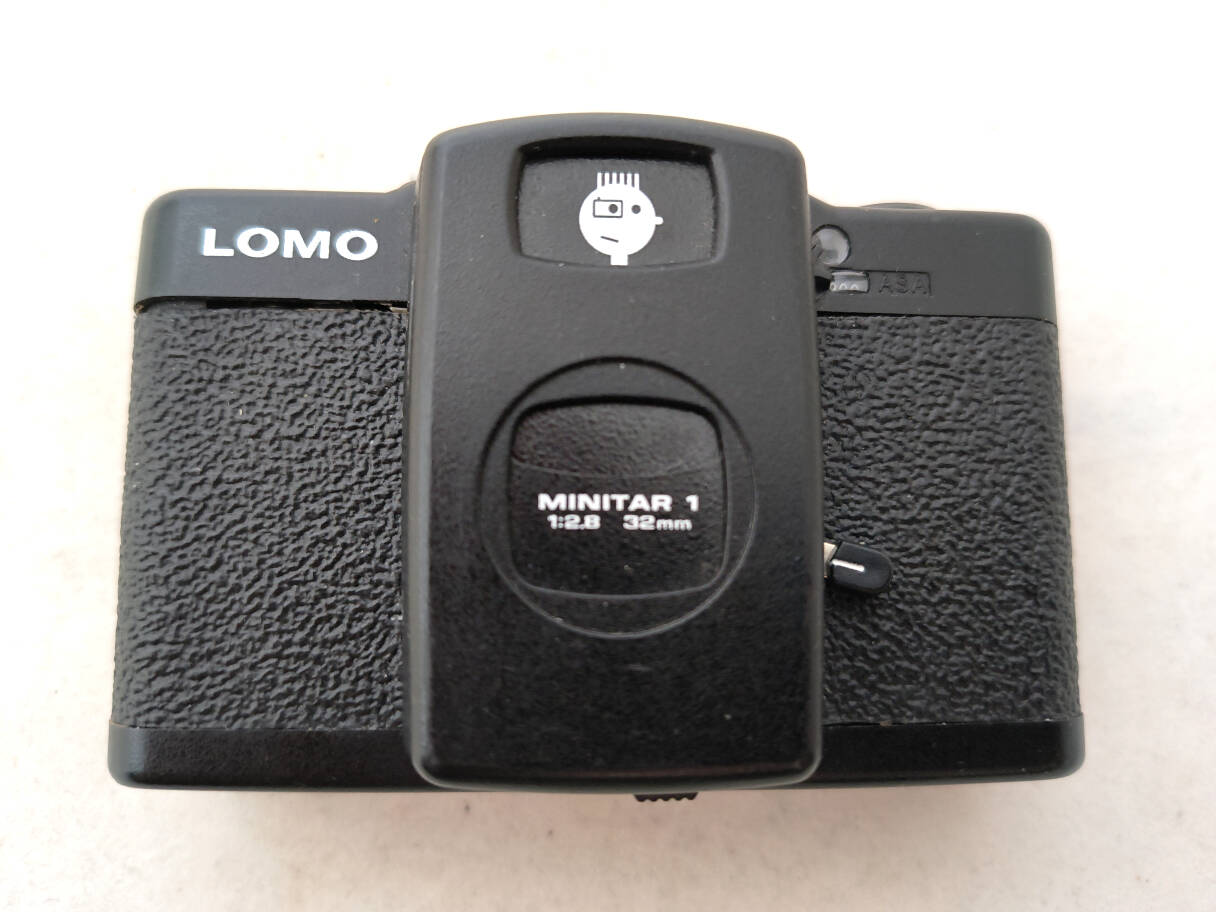
Camera closed. Well protected behind the "dust cover".
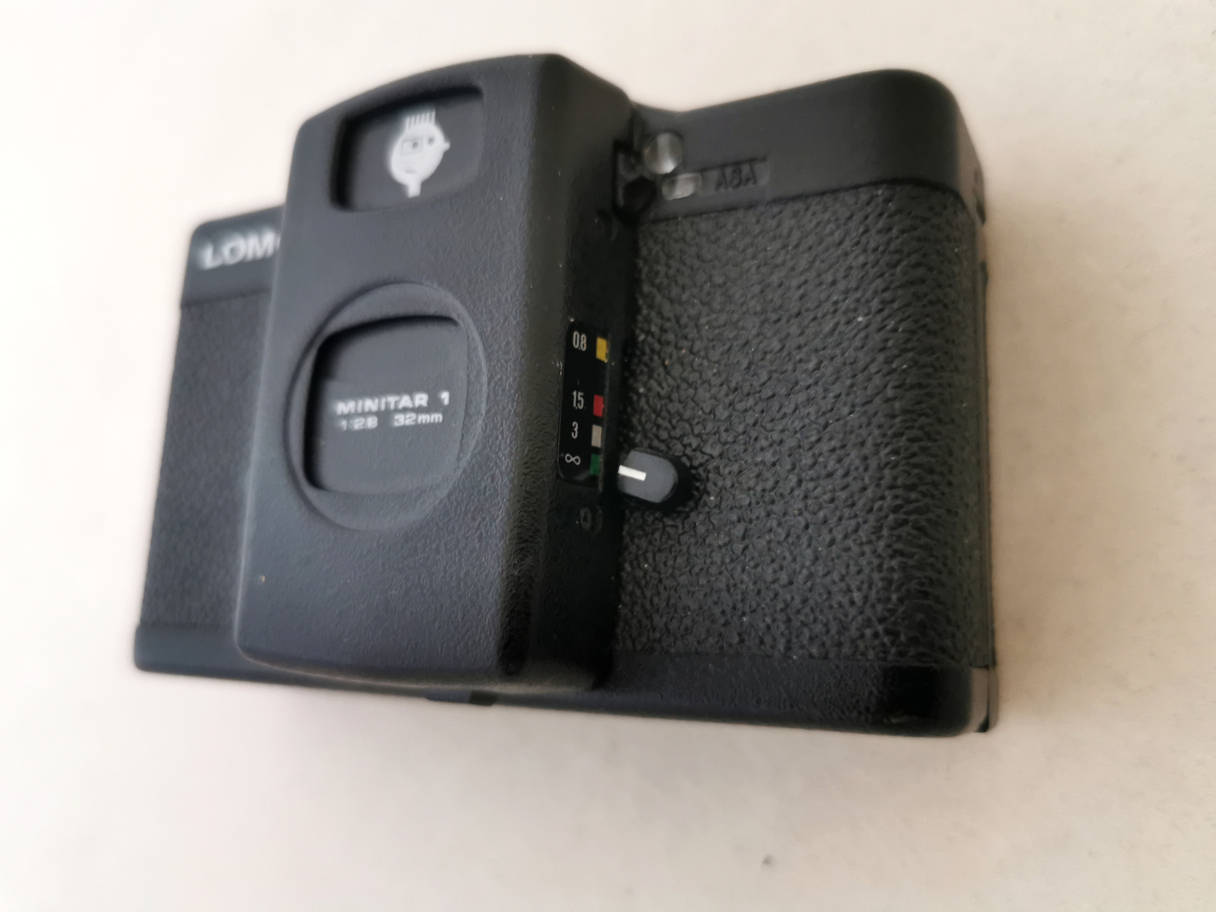
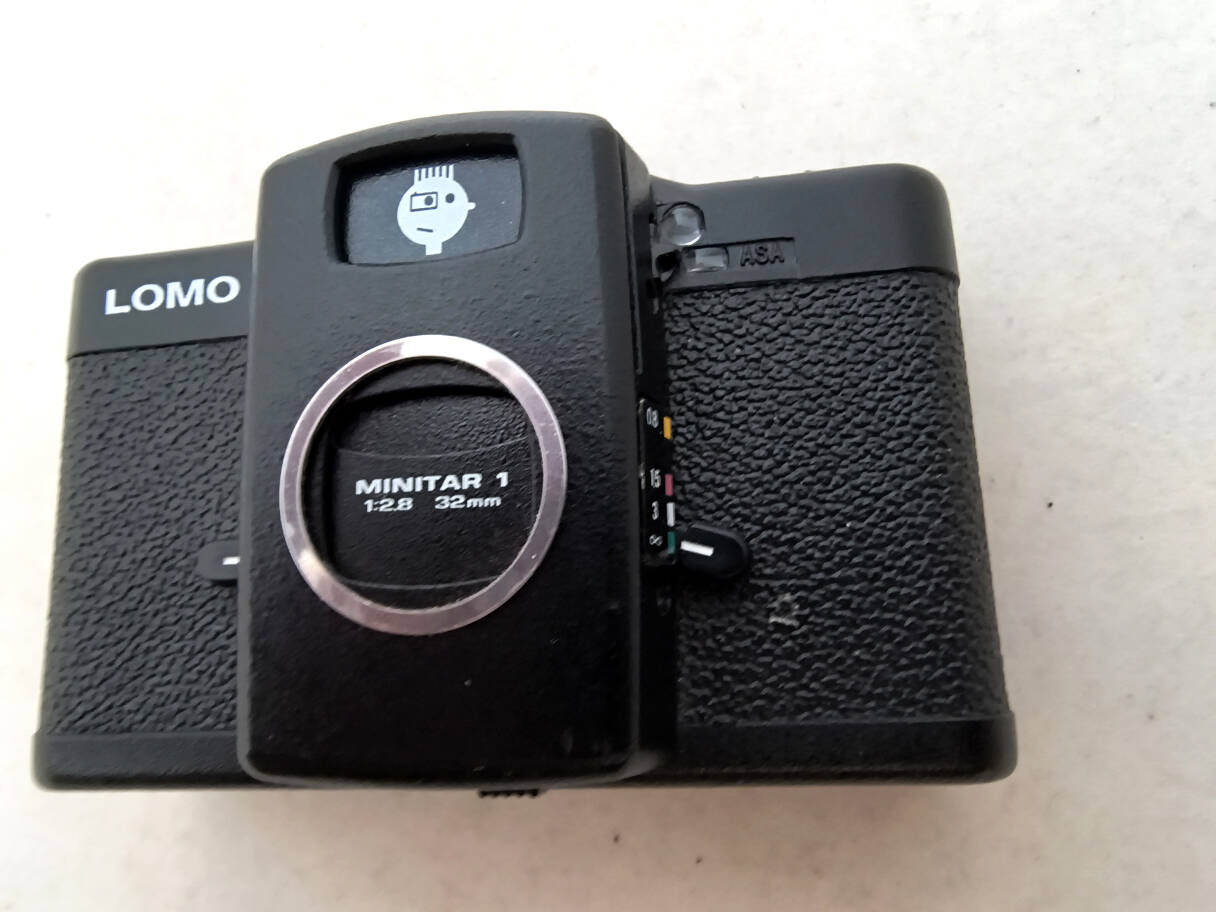
Distance setting. Near the top: photo cell, window showing ISO setting and tiny wheel to change setting.
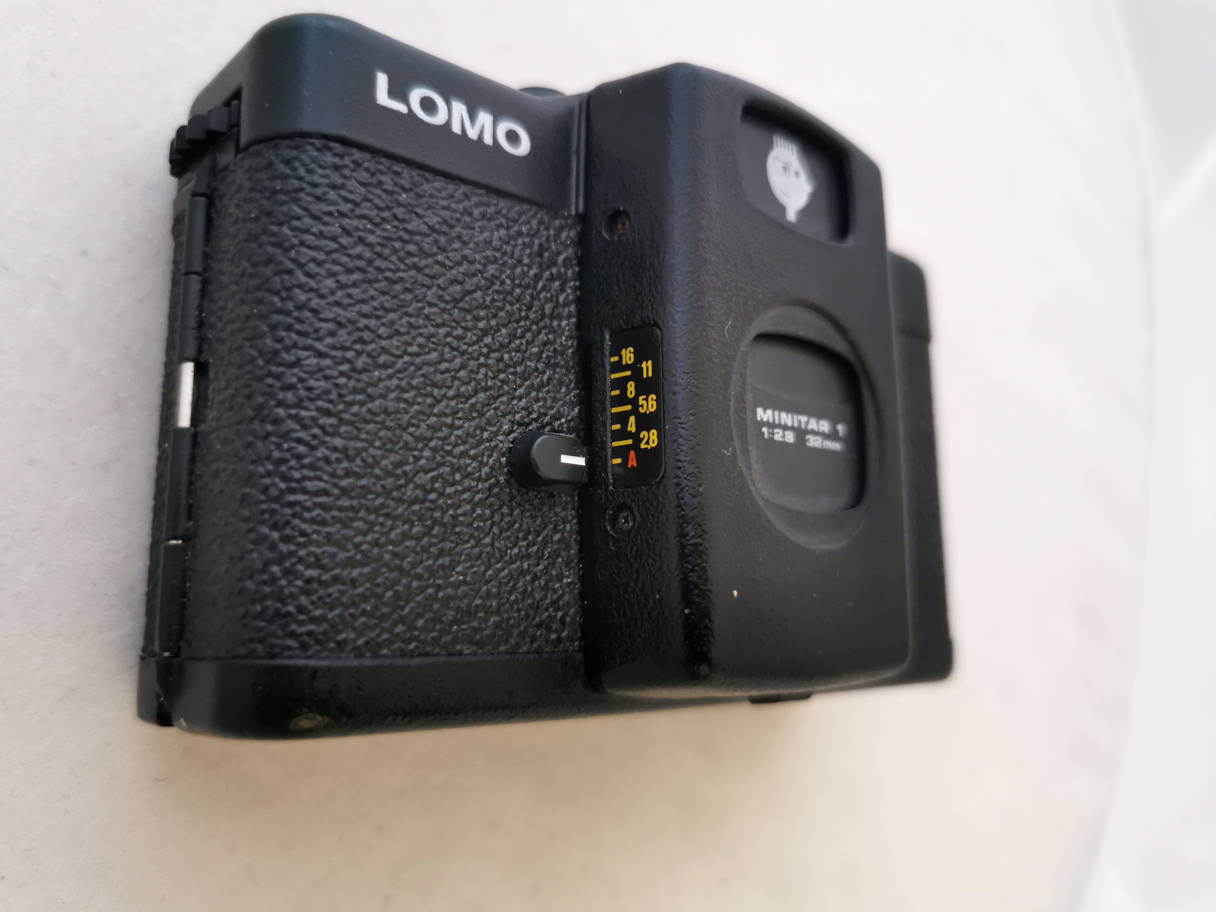
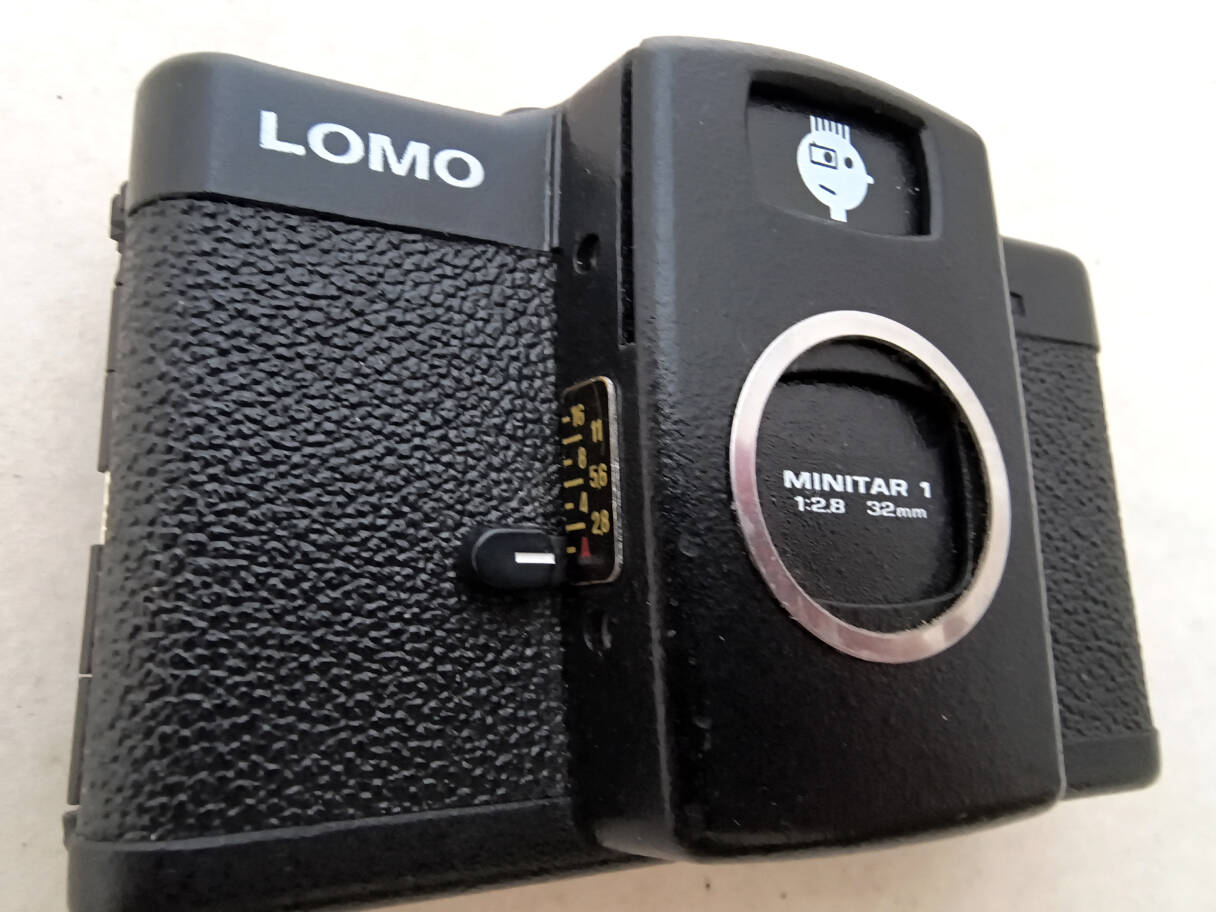
Sliding flash aperture control lever for flash pictures. Set to "A" = automatic, non-flash.
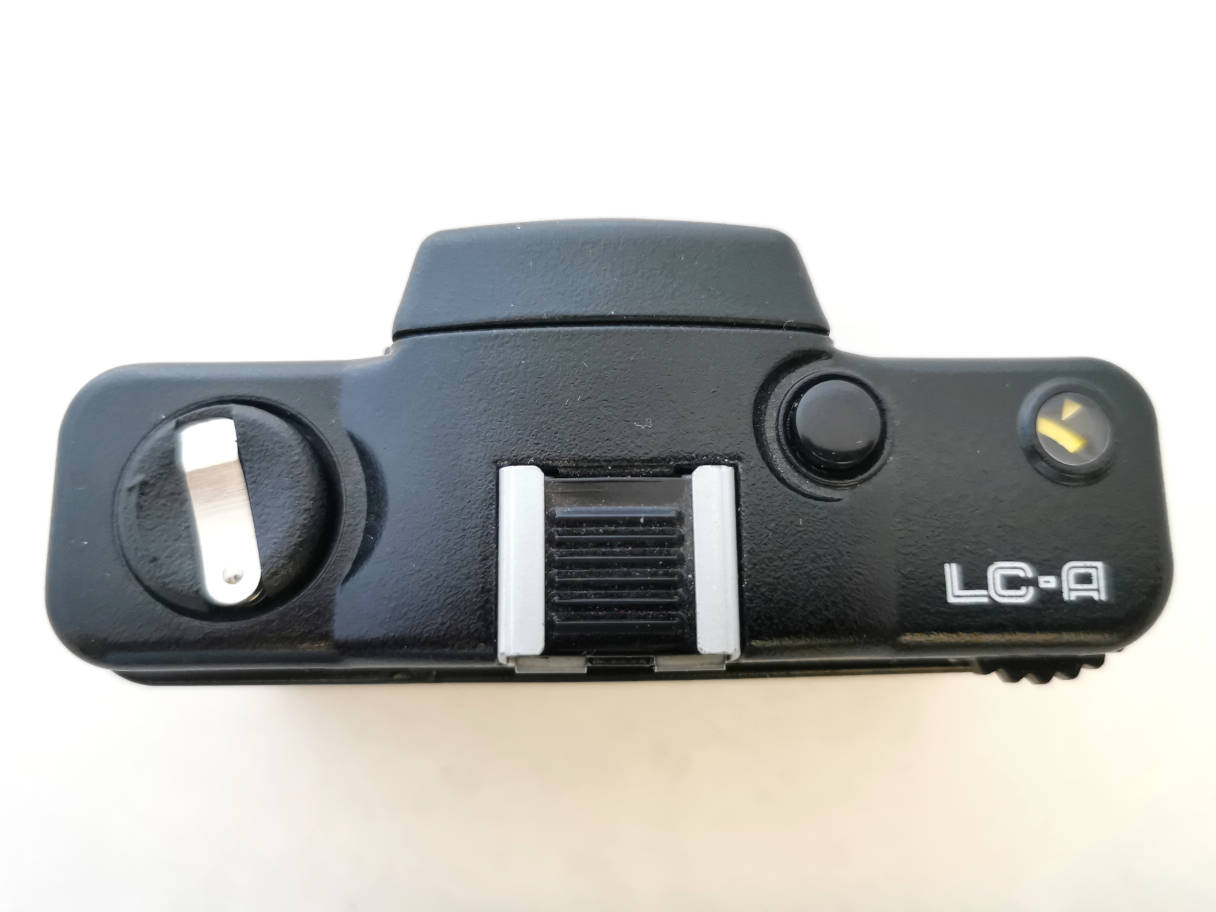
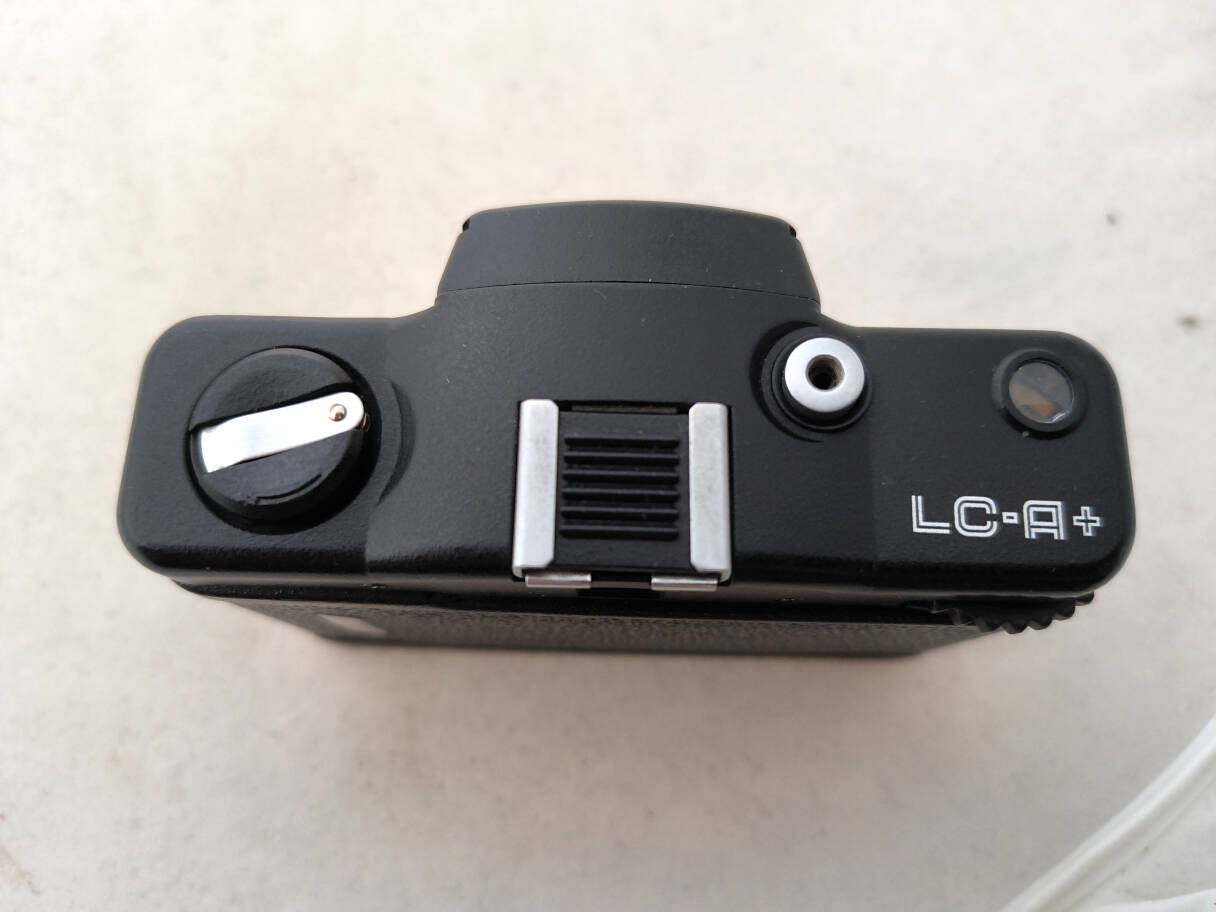
Seen from above. Exposure counter, shutter button, hot shoe wih cover, rewind handle.
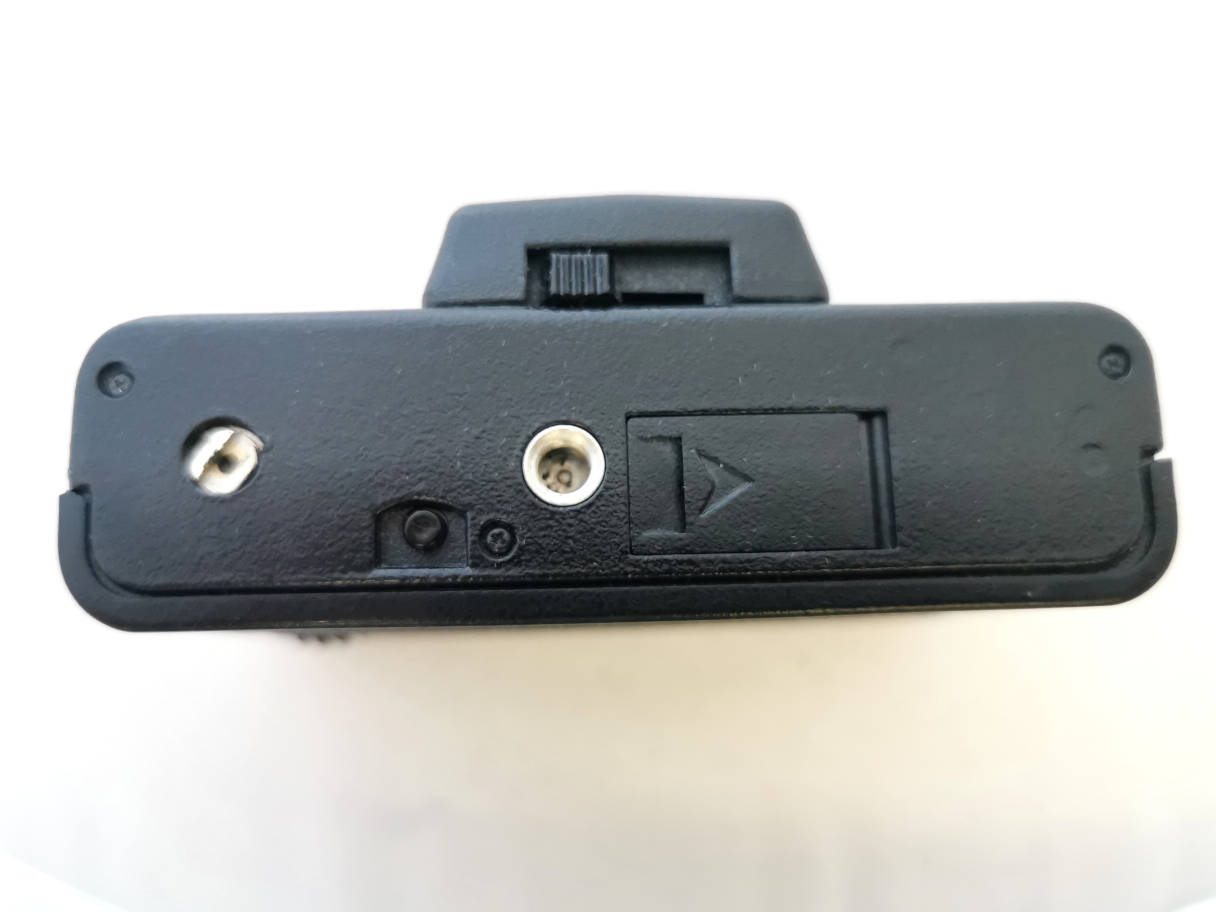
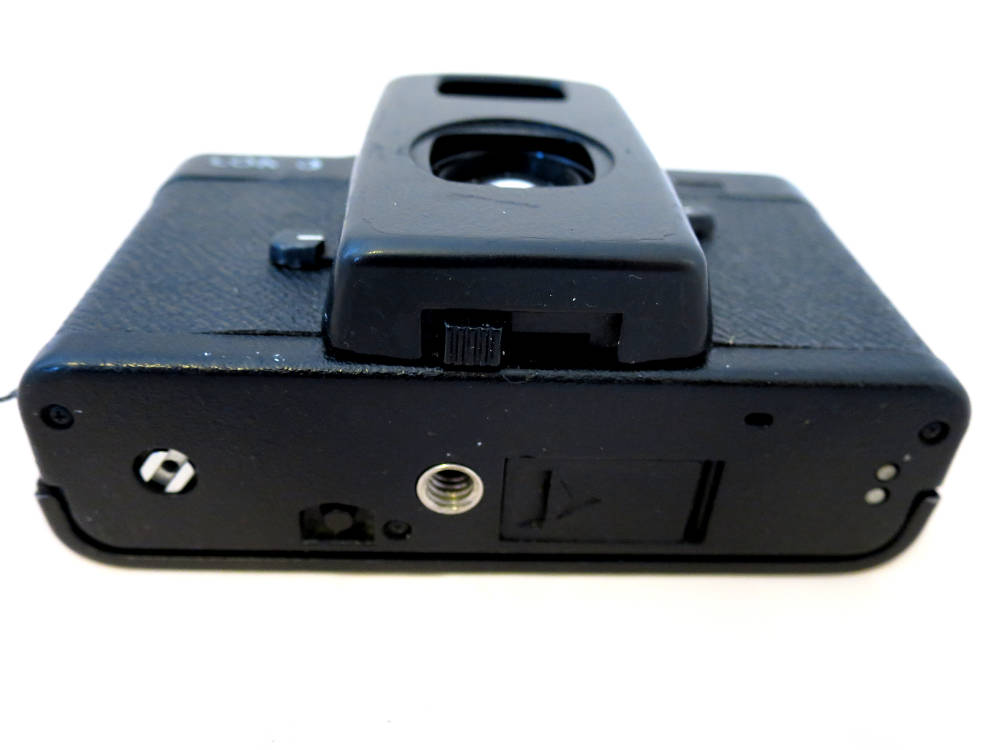
Seen
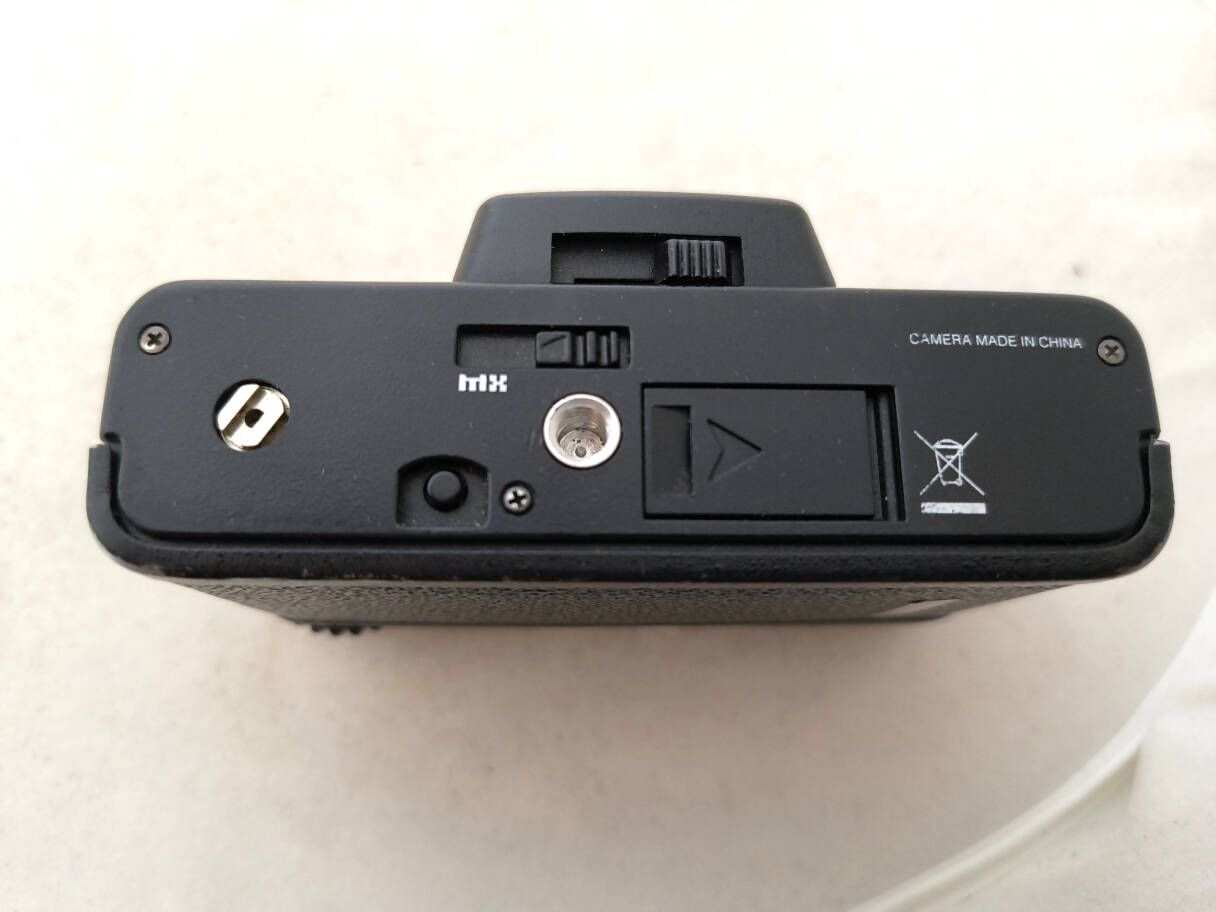
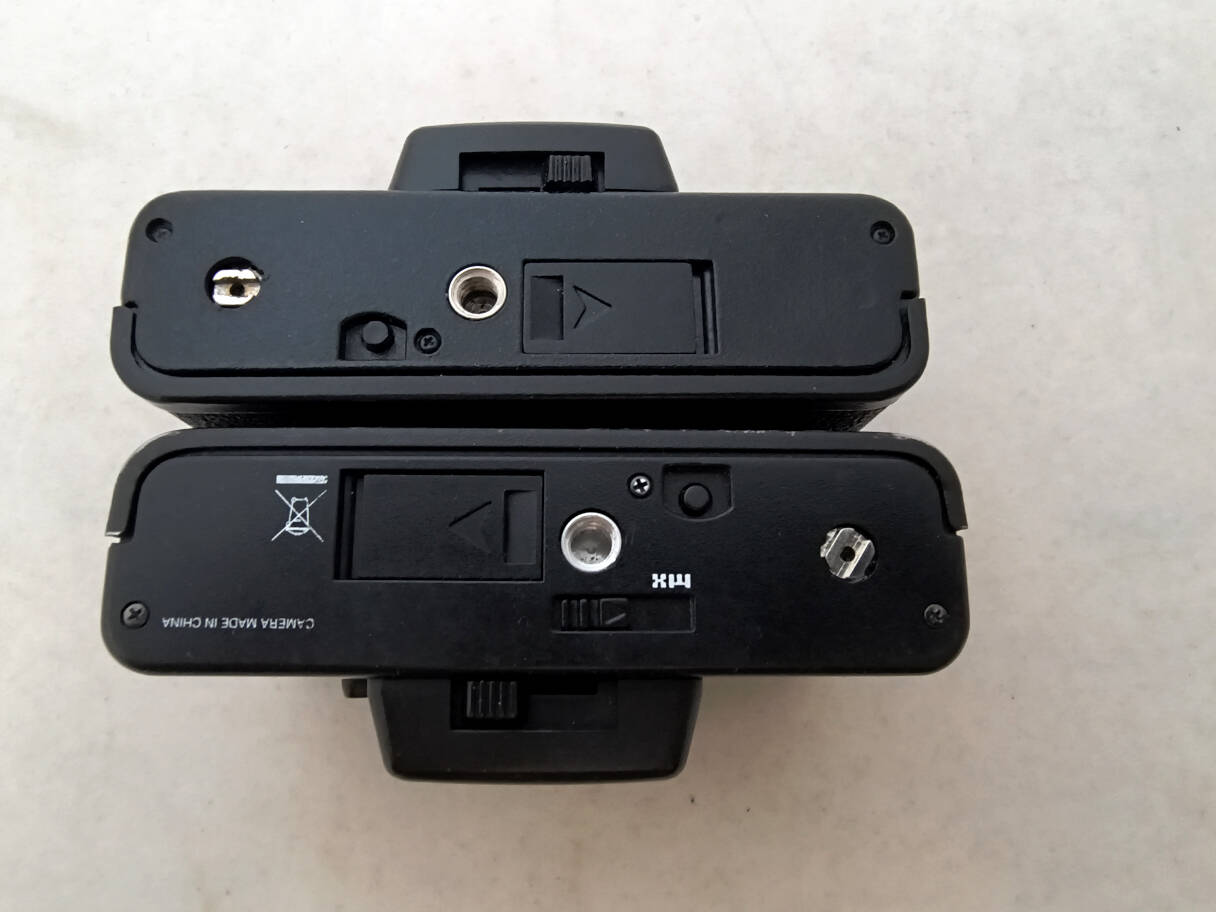
from below. Motor wind coupling, rewind unlock button, tripod socket, battery
compartment. It takes 3 LR/SR44 batteries, easily available. Under the lens: cover sliding
lever.
This is an earlier model with motor wind contacts. The motor wind was never released. The
wind from the Cosina is not compatible.
Cover open.
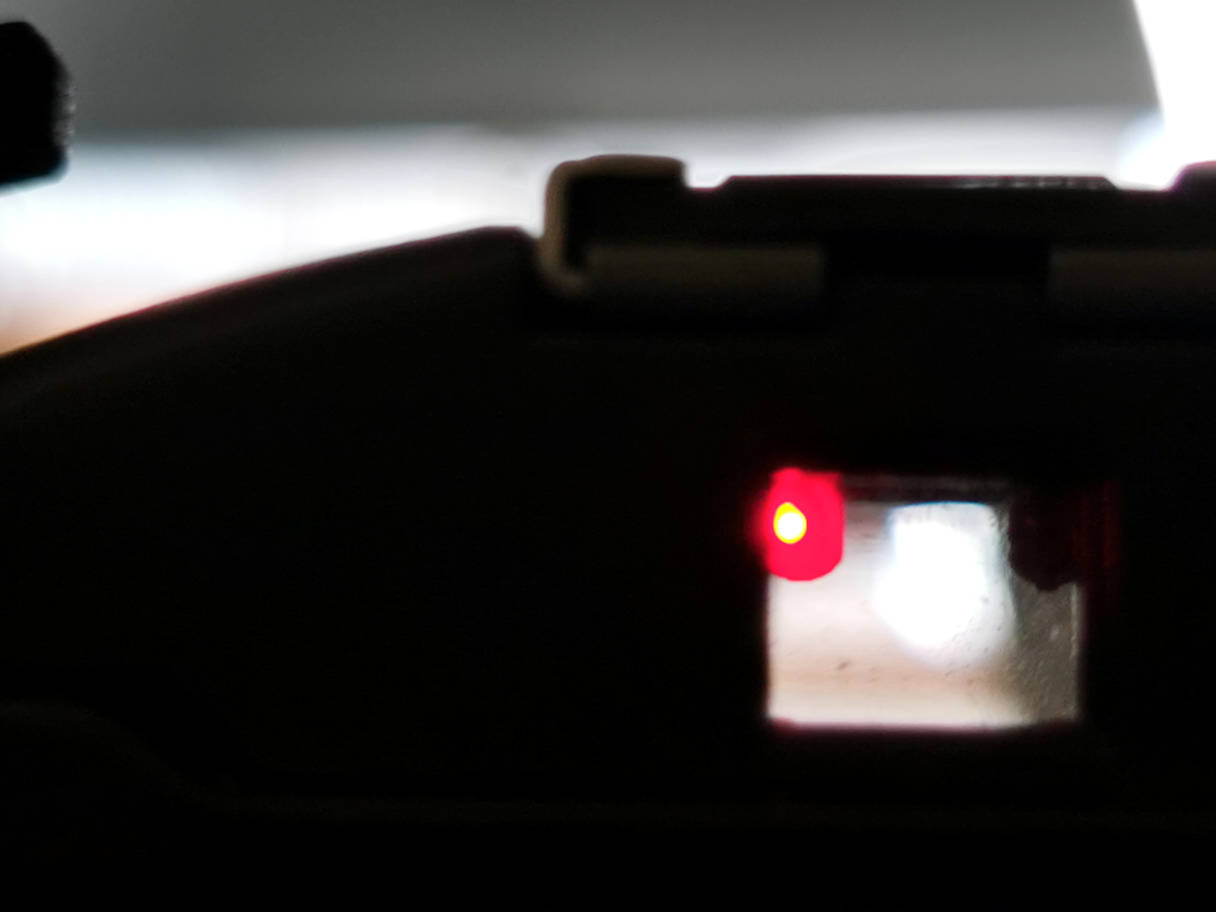
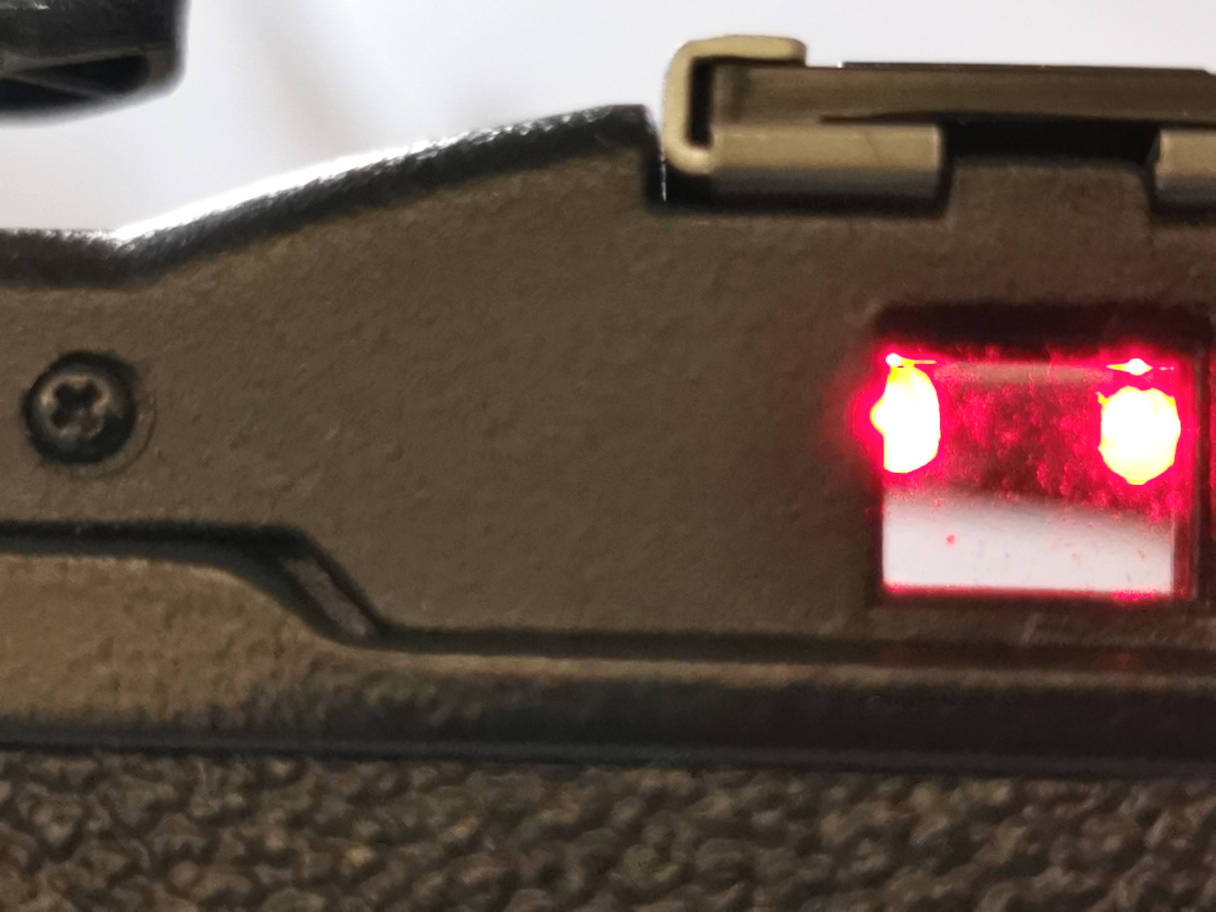
When the shutter button is half pressed, the left LED should light to confirm that the batteries are working.
If both LED light up, thereis low light. Keep the camera steady or use a flash.
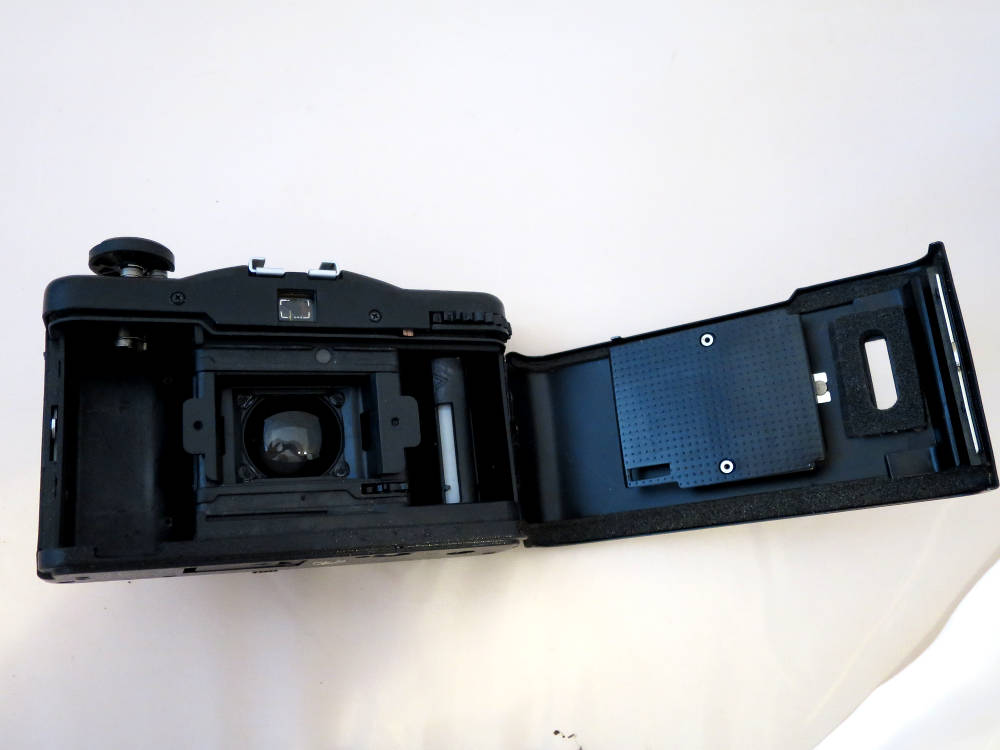
Camera open. The back cover is a modern + type one with a window for the film type.
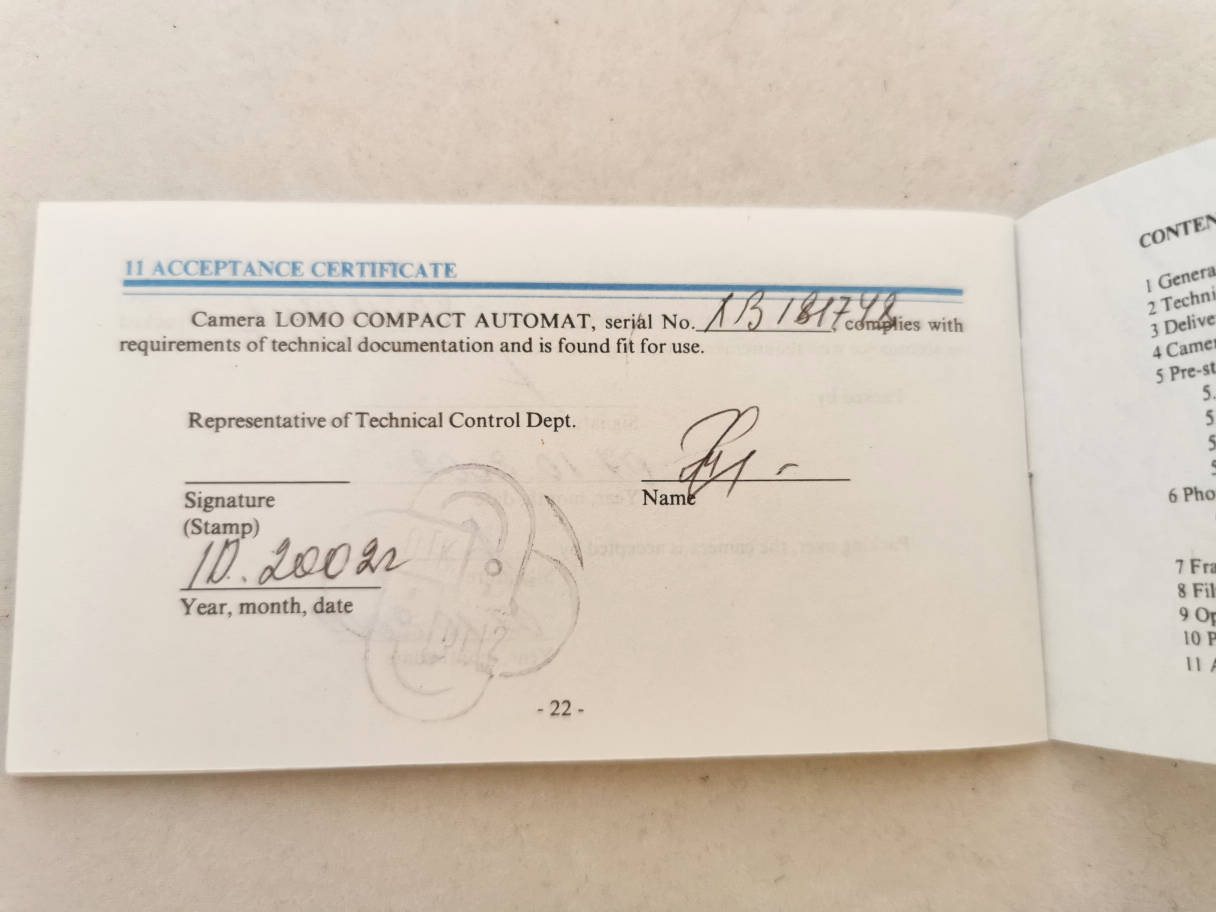
Camera papers.
The
Lomo LC-A is a nice and easy to handle camera. It's very compact, its
long exposure capability distances most of the others. It is widely
appreciated thanks to clever Lomography marketing. The simpler lens is
softer
than the Cosina one. Lomo nearly copied all of the camera, except the
sleek twist cover which they replaced by a simpler solution of a
sliding cover. So the lever under the lens actions the cover and they
added another lever for focussing to the right side of the lens. They
left out the self timer. The rest is a very close copy. However the
Cosina original is better and often cheaper. I cannot confirm that the
Russian Lomo is unreliable. Mine work fine, maybe I was lucky.
The
LC-A+ is more expensive and has some different features: ISO
100-1600, cable release socket, double exposure switch, accessory
"grooves" on each side of the lens, no aperture choice for flash, no
distance indicator in viewfinder. The build quality seems to be
inferior to the Russian model, this was confirmed to me by a Polish
repair firm. Especially the shutter button seems to be a problem. I
have 3 LC-A+ cameras with issues, one of them new, but as it was a
present, I could not get my hands on the warranty papers. Thanks to the
Polish guys both versions could be repaired. Meanwhile they have
disappeared from Ebay and I have not heard about another good repair
firm.
Some pictures of the + model:
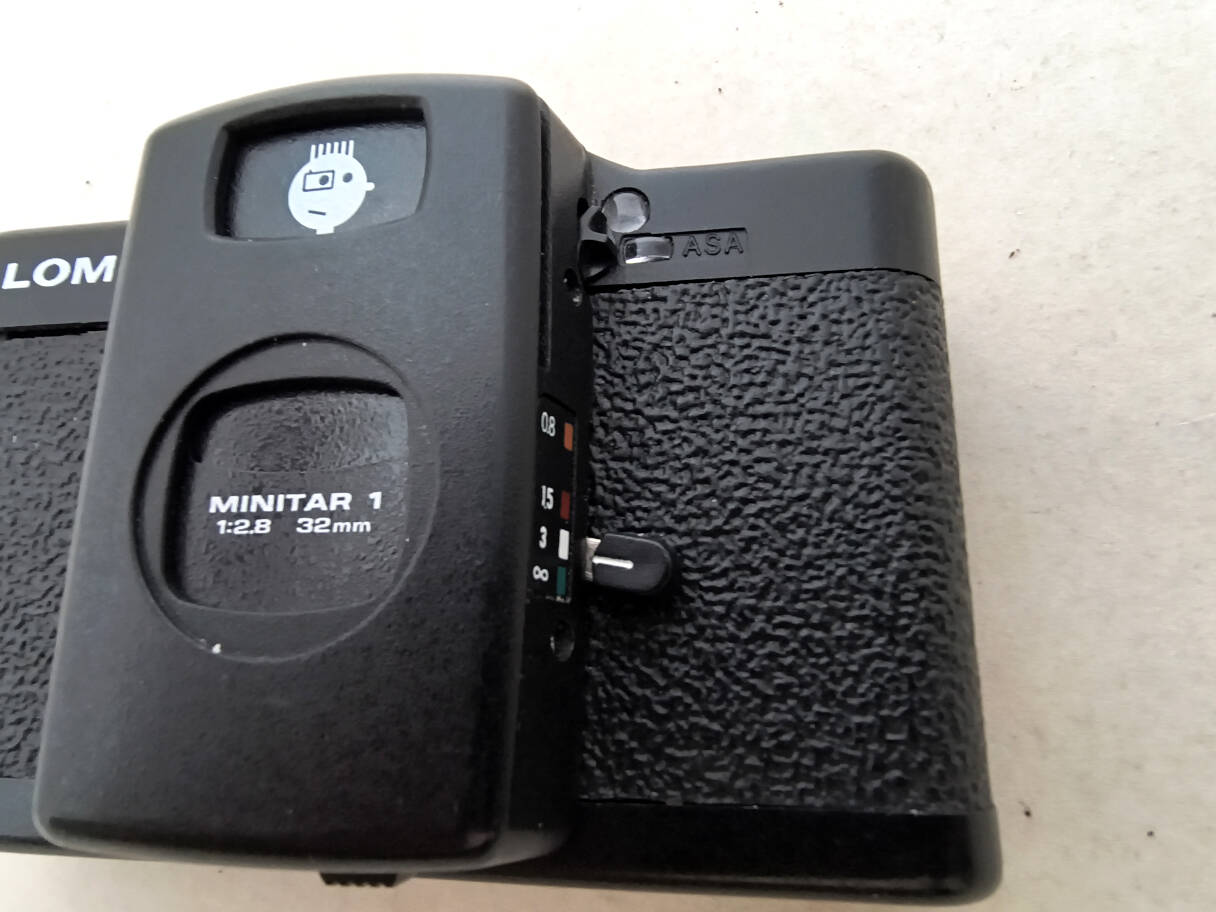
Only one lever, the distance setting.
LC-A+ inscription and cable release socket.
Multi-exposure switch and indication that it was produced in China.
Distance setting. Do not forget to check!
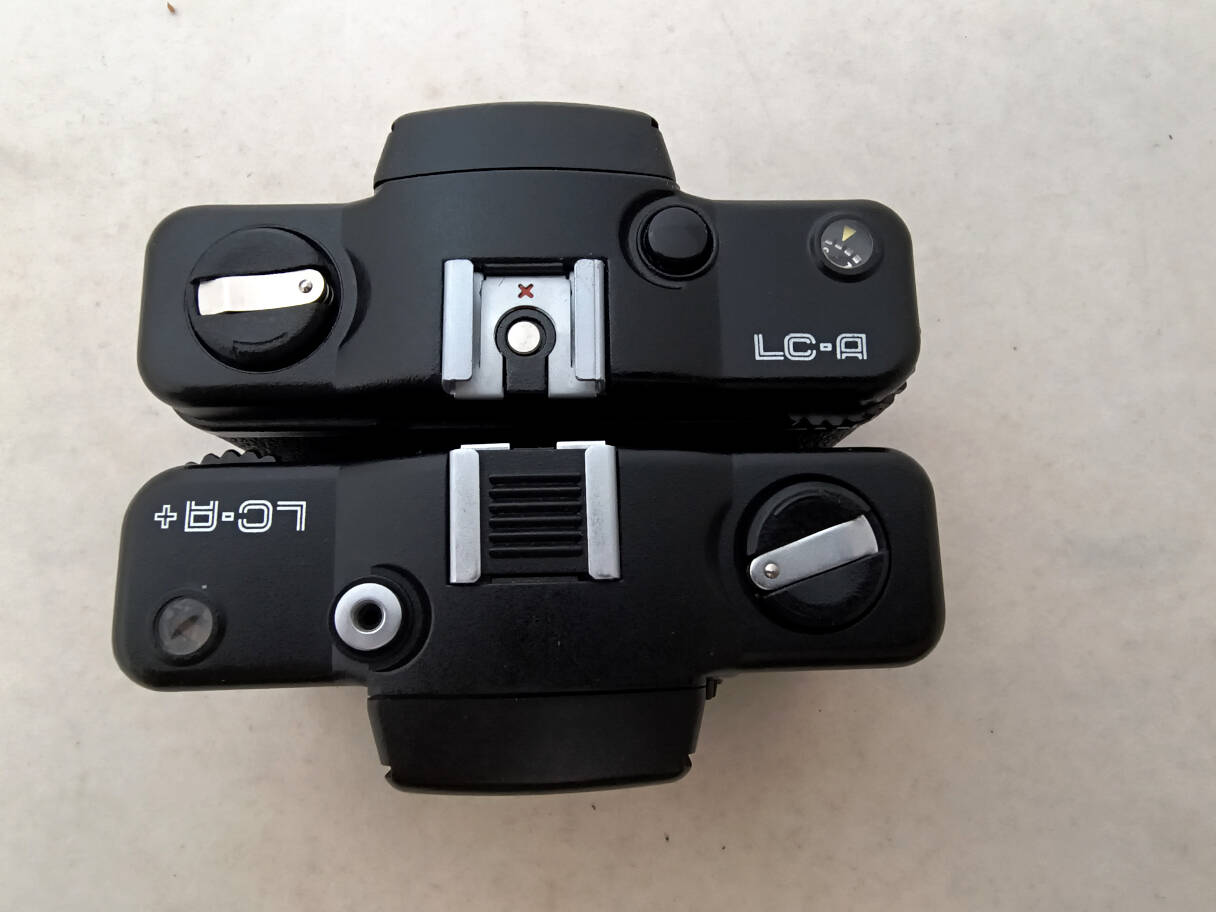
Both models...
...side to side.
Meanwhile all my LC-A+ cameras are broken, even the repaired ones. As
there is no further repair, you can use the + front on your ordinary
LCA to be able to attach some + model accessories. It's easy, just 4
screws hold the front and they are compatible size wise.
An ordinary LC-A with a + front. The silver ring is from other accessories. See the accessory page.
You have to make room for the second lever (easily done with a exacto knife). The scale can be peeled off the old front
Some gereral words about Lomography and their service: There is a
2-year warranty, at least in Europe. My personal experience with their
service is very good. As most of their cameras are made of (cheap)
plastic, there is no repair, they just exchange your defective camera.
You had to send it in to their Vienna office at your expenses, which
was
not cheap if you are not based in Austria, but they tried to compensate
by adding film or so to the return. A 2026 warranty issue was treated
by a new system: they sent me a prepaid shipping voucher. This is much
better. Anyway: You absolutely need a proof of
purchase, there was heavy abuse by fraudulent customers they told me.
So if you buy second hand or your camera is gift, be sure to put your
hands on the proof of purchase. After the 2-years warranty period
it's over. They will try to help for the expensive not-so-plastic
cameras like the LC series, but there is no repair. Keep
this in mind for the prices you pay for older gear.
You can attach an Instant back to the camera shown here.